

5 Abendroutinen, die dir helfen, schneller einzuschlafen und tiefer zu schlafen
Was du in den 2 Stunden vor dem Schlafengehen tust, bestimmt, wie schnell du einschläfst und wie tief du schläfst. Diese 5 wissenschaftlich belegten Gewohnheiten bereiten deinen Körper auf echte Erholung vor.

By Dr. Sarah Mitchell

Das Wichtigste auf einen Blick
- —Dein Körper braucht Umgebungssignale, um in den Schlafmodus zu wechseln — eine konsequente Routine liefert sie
- —Licht, Temperatur und mentaler Zustand sind die drei Hebel, die du kontrollieren kannst
- —Die richtige Routine kann die Einschlafzeit um 30–45 Minuten verkürzen
Dein Körper hat keinen Ausschalter
Du kannst nicht von E-Mails beantworten direkt in den Tiefschlaf wechseln. Dein zirkadianer Rhythmus — die innere Uhr, die den Schlaf-Wach-Zyklus steuert — reagiert auf Umgebungssignale. Eine konsequente Abendroutine trainiert deinen Körper, zu erkennen, dass es Zeit ist, herunterzufahren.
Ohne diese Signale liegst du wach, starrst an die Decke und fragst dich, warum du nicht schlafen kannst, obwohl du erschöpft bist.
1. Dimme das Licht 2 Stunden vor dem Schlafengehen
Helles Licht, besonders das blaue Lichtspektrum von Handys und Laptops, unterdrückt Melatonin — das Hormon, das deinem Körper signalisiert, dass es Zeit zum Schlafen ist.
Beginne 2 Stunden vor deiner Ziel-Schlafenszeit:
- —Wechsle zu warmem, gedimmtem Licht (unter 50 Lux)
- —Nutze Blaulichtfilter-Brillen, wenn du Bildschirme brauchst
- —Smarte Lampen können automatisch auf wärmere Töne umschalten
Studien zeigen, dass allein diese Änderung den Einschlafzeitpunkt um 30–45 Minuten vorverlegen kann.
2. Kühle dein Schlafzimmer auf 18–20 °C
Deine Körperkerntemperatur muss um etwa 1–1,5 °C sinken, um den Schlaf einzuleiten. Ein warmer Raum arbeitet gegen diesen natürlichen Prozess.
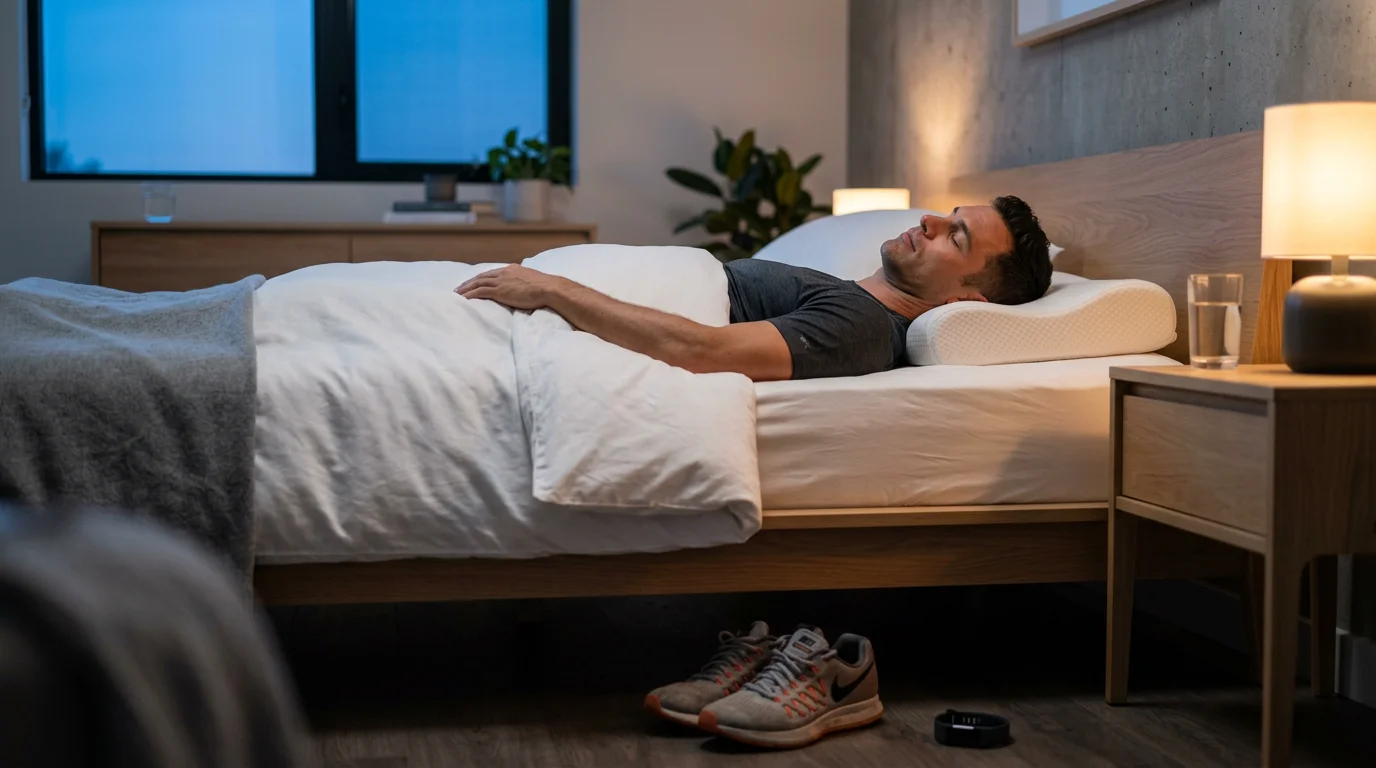
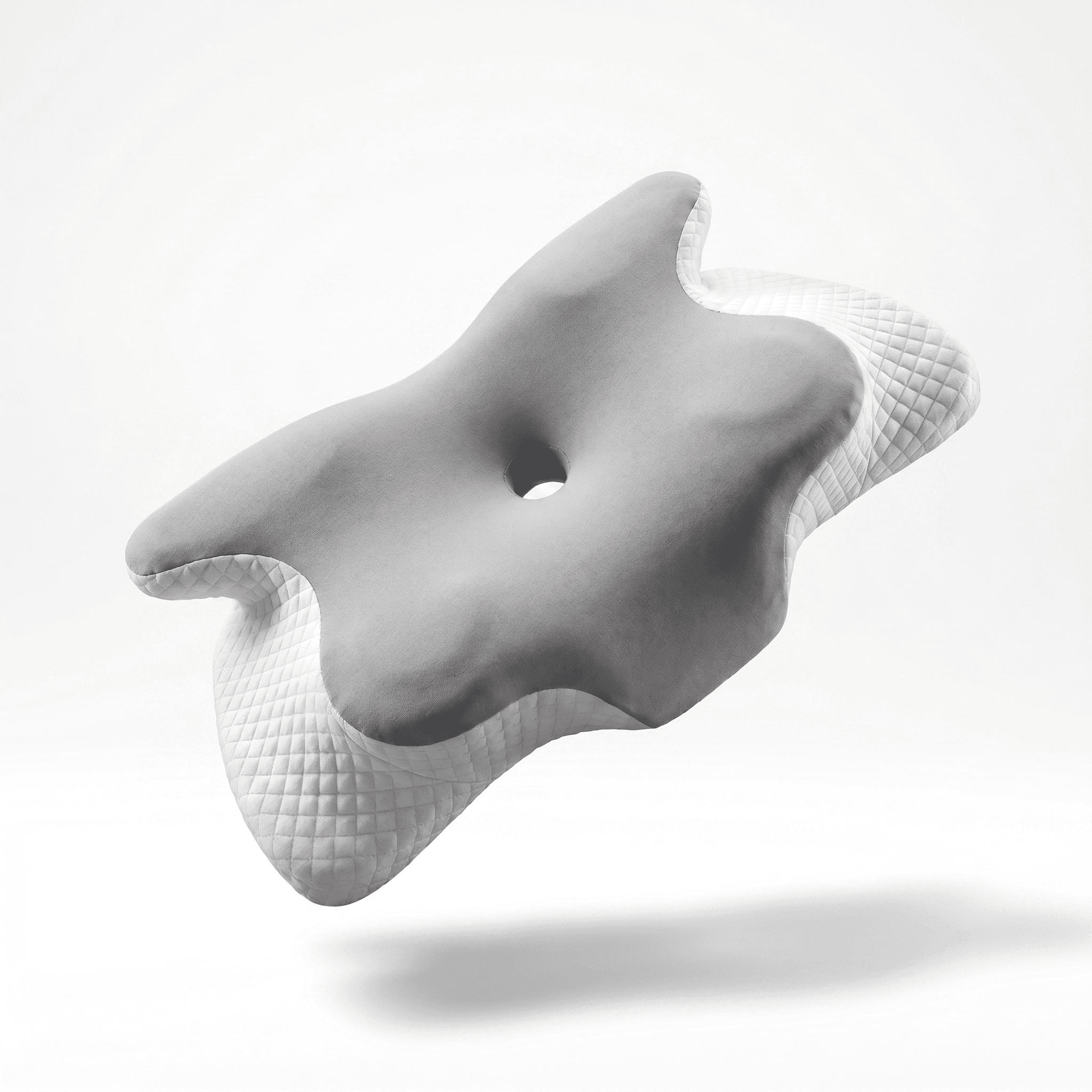
Stelle dein Thermostat auf 18–20 °C und verwende atmungsaktive Bettwäsche. Wenn du nachts zum Überhitzen neigst, hilft ein Kissen mit aktiver cooling Technologie — The Sleepr nutzt eine Phase-Change cool-touch-Technologie, die überschüssige Wärme aufnimmt, und eine Belüftungsschicht darunter für kontinuierlichen Luftstrom. Es bleibt bis zum Morgen kühl, nicht nur die ersten 15 Minuten.
3. Mach einen 5-Minuten-"Gedanken-Dump"
Rasende Gedanken sind einer der Hauptgründe, warum Menschen nicht einschlafen können. Die Lösung ist einfach: Schreib sie aus deinem Kopf aufs Papier.
- —Verbringe 5 Minuten damit, alles aufzuschreiben, was dir durch den Kopf geht
- —Schreib die To-do-Liste für morgen auf, Sorgen und zufällige Gedanken
- —Ordne oder priorisiere nichts — schreib einfach drauflos
Eine Studie der Baylor University ergab, dass das Aufschreiben einer konkreten To-do-Liste für den nächsten Tag den Probanden half, 9 Minuten schneller einzuschlafen als diejenigen, die über erledigte Aufgaben schrieben.
4. Nimm ein warmes Bad oder eine warme Dusche
Klingt widersprüchlich, aber ein warmes Bad 1–2 Stunden vor dem Schlafengehen hilft tatsächlich beim Abkühlen. Wenn du aus dem warmen Wasser steigst, sinkt deine Körpertemperatur schnell — das ahmt den natürlichen Temperaturabfall nach, der Müdigkeit auslöst.
Forschung in Sleep Medicine Reviews ergab, dass ein 10-minütiges warmes Bad 1–2 Stunden vor dem Schlafengehen sowohl die Einschlafgeschwindigkeit als auch die Schlaftiefe verbesserte.
5. Richte deine Schlafumgebung ein
Das Letzte, was du vor dem Zubettgehen tust, zählt. Nimm dir 2 Minuten:
- —Stelle sicher, dass dein Zimmer dunkel ist (Verdunkelungsvorhänge oder eine Schlafmaske)
- —Überprüfe, ob dein Kissen richtig positioniert ist — wenn du ein konturiertes Kissen wie The Sleepr verwendest, sollte die höhere Flügelseite beim Seitenschlafen unter deinem Nacken liegen
- —Leg dein Handy außer Reichweite (wenn du es als Wecker nutzt, leg es auf die andere Seite des Zimmers)
Fang mit einer an, dann bau darauf auf
Du musst nicht deinen ganzen Abend auf einmal umkrempeln. Wähle die Routine, die dein größtes Schlafproblem angeht — wenn du mit rasenden Gedanken wach liegst, fang mit dem Gedanken-Dump an. Wenn du überhitzt, behebe das Temperaturproblem. Innerhalb weniger Wochen hast du eine Routine, die spürbar verbessert, wie schnell du einschläfst und wie erholt du dich morgens fühlst.
5 Min. Lesezeit
Verwandte Artikel
Wie Schlaf deine Gehirngesundheit beeinflusst (und warum dein Kissen wichtig ist)
Bestes Kissen gegen Nackenschmerzen: Worauf du achten solltest (und was du vermeiden solltest)