

So richtest du dein Schlafzimmer für den tiefsten Schlaf ein
Licht, Temperatur, Geräusche und dein Kissen — die vier Dinge, die bestimmen, ob du erholsamen Schlaf bekommst oder dich die ganze Nacht hin und her wälzt. So optimierst du jeden einzelnen Faktor.

By Emma Clarke
Das Wichtigste auf einen Blick
- —Licht, Temperatur und Geräusche sind die drei Umgebungssäulen der Schlafqualität
- —Schon geringe Lichtmengen während des Schlafs unterdrücken Melatonin und reduzieren die Tiefschlafzeit
- —Dein Kissen und deine Bettwäsche sind die "Hardware", auf der alles andere aufbaut
Dein Schlafzimmer hilft dir entweder beim Schlafen oder hält dich wach
Die meisten Menschen konzentrieren sich auf das, was sie vor dem Schlafengehen tun — Koffein vermeiden, das Handy weglegen, versuchen sich zu entspannen. Aber der Raum selbst spielt eine größere Rolle als all diese Gewohnheiten. Wenn deine Umgebung nicht stimmt, wird keine Meditation oder Kamillentee dich in den Tiefschlaf bringen.
1. Licht: Komplett blockieren
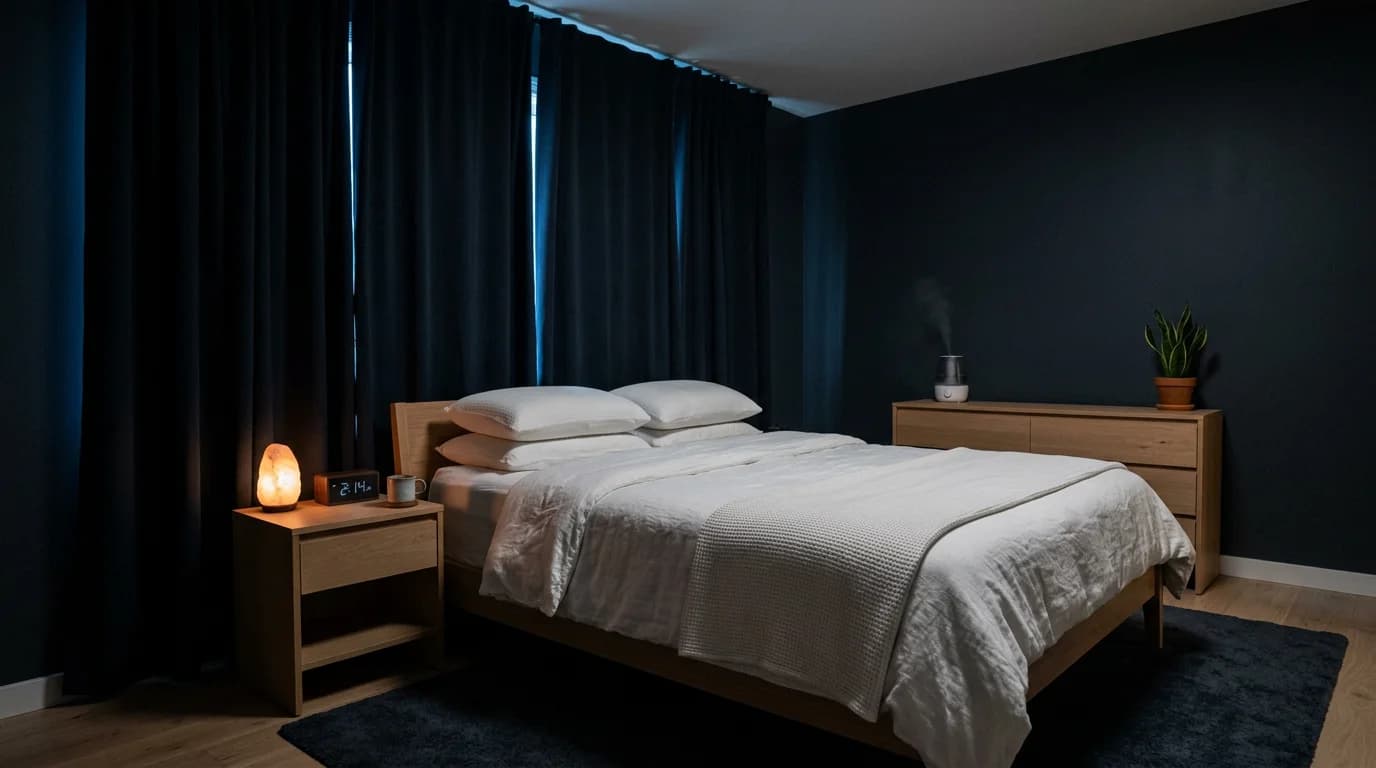
Licht ist das stärkste Signal für deinen zirkadianen Rhythmus. Schon schwaches Licht während des Schlafs — von einer Straßenlaterne, der LED eines Ladegeräts oder dem Flur — kann Melatonin unterdrücken und die Tiefschlafzeit reduzieren.
So behebst du es:
- —Installiere Verdunkelungsvorhänge, die 99 %+ des Außenlichts blockieren
- —Klebe jede LED-Anzeige in deinem Schlafzimmer ab oder entferne das Gerät
- —Wenn du bei ausgeschaltetem Licht deine Hand vor dem Gesicht sehen kannst, ist dein Zimmer nicht dunkel genug
- —Nutze eine Schlafmaske als Backup — wähle eine, die nicht auf die Augenlider drückt
Morgen-Trick: Setze dich innerhalb von 30 Minuten nach dem Aufwachen hellem Licht aus, um deinen zirkadianen Rhythmus zu stärken. Öffne die Vorhänge oder geh kurz nach draußen.
2. Temperatur: Kühler als du denkst
Deine Körperkerntemperatur muss um etwa 1–1,5 °C sinken, um den Schlaf einzuleiten. Ein warmes Schlafzimmer arbeitet gegen diesen Prozess.
Das Ziel: 18–20 °C. Die meisten Menschen halten ihre Schlafzimmer zu warm.
Bettwäsche spielt hier auch eine Rolle: Atmungsaktive, feuchtigkeitsableitende Materialien verhindern, dass sich Wärme um deinen Körper staut. Wenn du zum Überhitzen neigst, achte auf ein Kissen mit aktivem cooling — The Sleepr nutzt eine Phase-Change Gel-Schicht und ein Belüftungssystem, das die ganze Nacht die Temperatur reguliert, nicht nur beim ersten Kontakt.
Wenn du das Bett teilst: Erwäge separate Bettdecken, wenn du und dein Partner unterschiedliche Temperaturvorlieben habt. Das ist der am meisten unterschätzte Schlaf-Hack für Paare.
3. Geräusche: Stille oder Gleichmäßigkeit
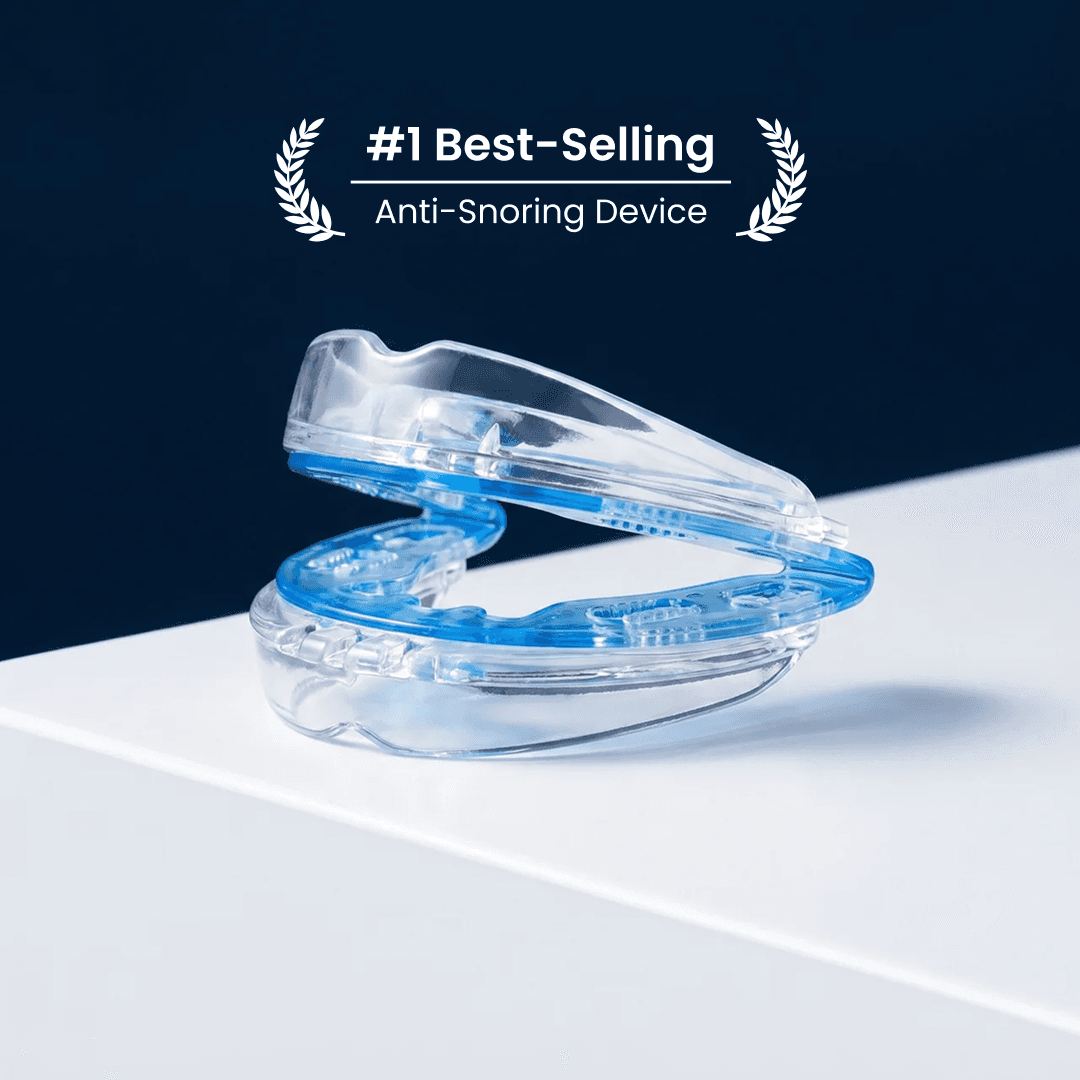
Absolute Stille ist ideal. Aber wenn du Verkehr, Nachbarn oder einen schnarchenden Partner nicht kontrollieren kannst, ist das Nächstbeste ein gleichmäßiges Hintergrundgeräusch, das Störungen überdeckt.
Optionen:
- —Eine White-Noise-Maschine (dediziertes Gerät, keine Handy-App — Handys strahlen Licht aus und zeigen Benachrichtigungen)
- —Hochwertige Schaumstoff-Ohrstöpsel (NRR 33) für völlige Stille
- —Dicke Vorhänge und Teppiche absorbieren Schall und reduzieren Echo
Vermeiden: Mit dem Fernseher einschlafen. Die Audio- und Lichtwechsel lösen Mikro-Aufwachphasen aus, die deinen Schlaf fragmentieren.
4. Dein Kissen: Der am meisten übersehene Faktor
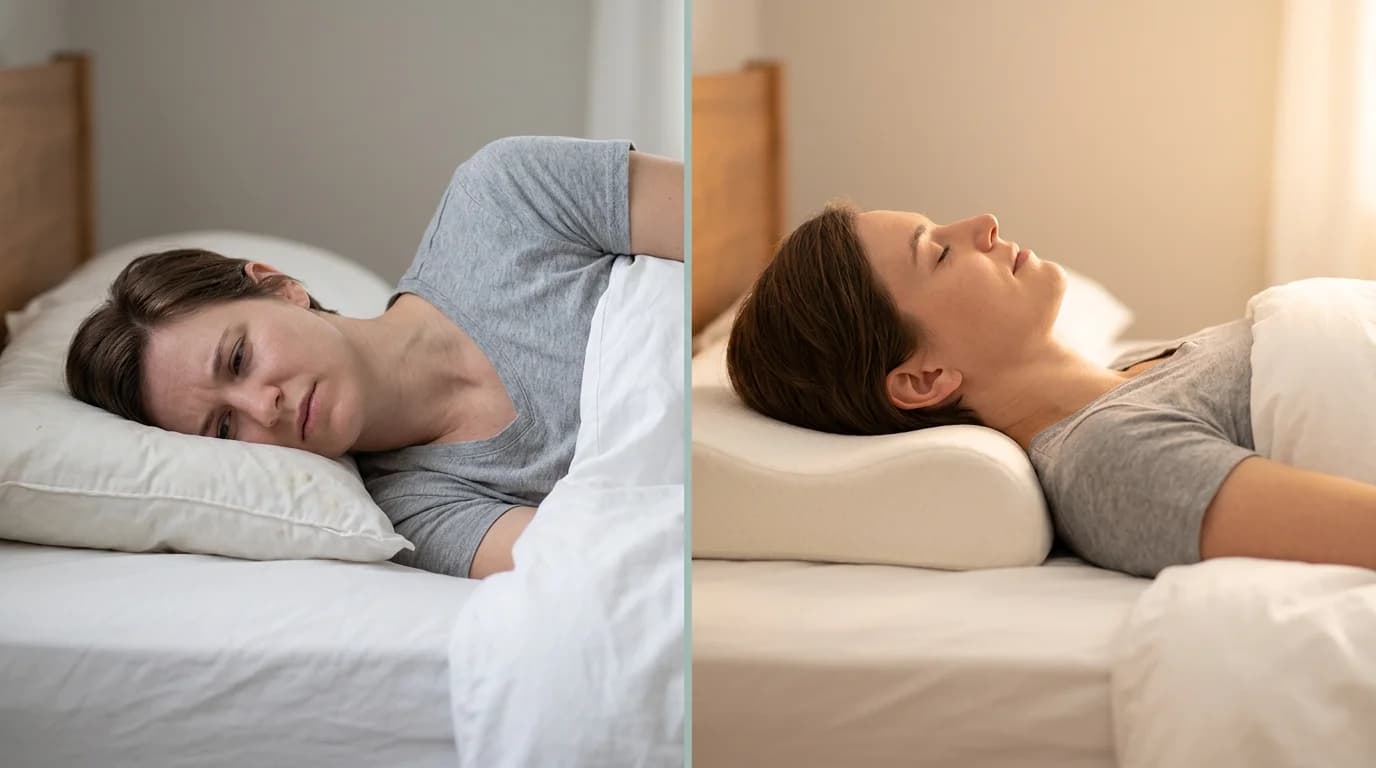
Du kannst dein Zimmer verdunkeln, die Temperatur perfekt einstellen und jedes Geräusch eliminieren — aber wenn dein Kissen deinen Nacken im falschen Winkel hält, wachst du trotzdem steif und unausgeruht auf.
Dein Kissen sollte deine Halswirbelsäule neutral halten, egal ob du auf dem Rücken, der Seite oder beides schläfst. Die meisten Standardkissen sind entweder zu flach (Kopf fällt nach hinten) oder zu dick (Kinn wird zur Brust gedrückt). Beides ist nicht neutral.
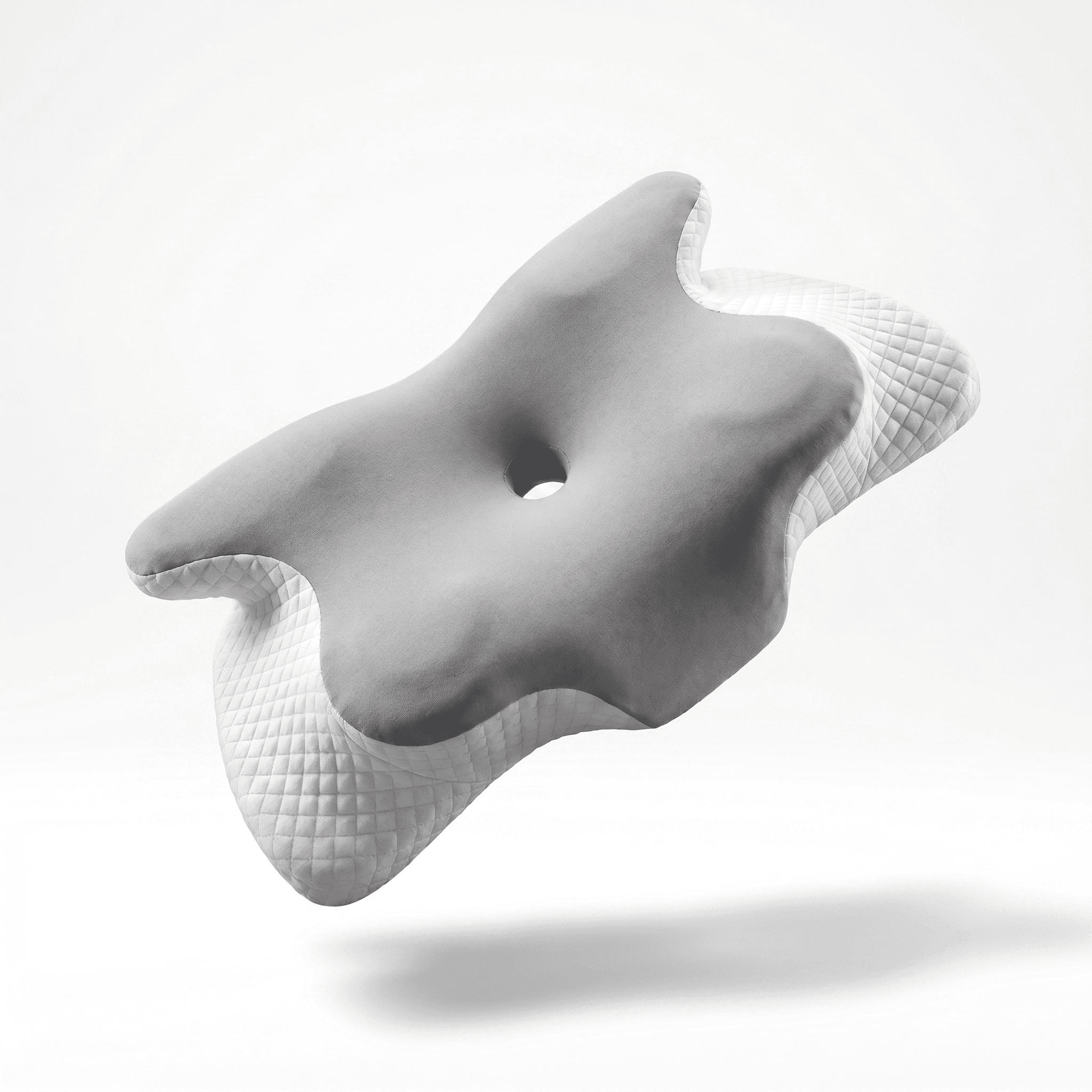
Der butterfly contour von The Sleepr löst das mit Zonen, die für jede Position designt sind — höhere Flügel für die Seitenlage, eine niedrigere Mitte für die Rückenlage, Schulteraussparungen für den richtigen Freiraum. Es ist die Grundlage, auf der deine Schlafumgebung aufbaut.
5. Aufräumen: Weniger Zeug, weniger Stress
Forschung zeigt, dass ein unaufgeräumtes Schlafzimmer Cortisol erhöht und die Schlafqualität senkt. Du brauchst keinen minimalistischen Showroom, aber dein Schlafzimmer sollte sich ruhig anfühlen.
- —Entferne Arbeitsmaterialien (Laptop, Notizbücher, alles, was dich an deine To-do-Liste erinnert)
- —Halte Nachttische frei, außer für das Nötigste
- —Reserviere das Schlafzimmer für Schlaf (und Intimität) — nicht für Netflix, Essen oder Arbeiten
Fazit
Deine Schlafumgebung ist ein System. Licht, Temperatur, Geräusche und dein Kissen arbeiten zusammen. Optimiere jeden einzelnen Faktor und der kumulative Effekt ist erheblich — du schläfst schneller ein, bleibst länger im Tiefschlaf und wachst auf, als hättest du dich tatsächlich erholt. Fang mit dem schwächsten Glied in deinem aktuellen Setup an.
5 Min. Lesezeit
Verwandte Artikel
Bestes Kissen gegen Nackenschmerzen: Worauf du achten solltest (und was du vermeiden solltest)
5 Abendroutinen, die dir helfen, schneller einzuschlafen und tiefer zu schlafen